
(II) Restoration — No. 07
Prosthodontics
To rebuild is to stay true to the original.
Rebuilding damaged or missing teeth with crowns, bridges and dentures — in shape, function and colour.
At a glance
- Visits
- Usually 2–4
- Duration
- 1–3 weeks
- Anaesthesia
- Local, if needed
- Material
- Chosen for each case
Durations and visit counts are typical values; they vary from person to person and become clear after an examination.
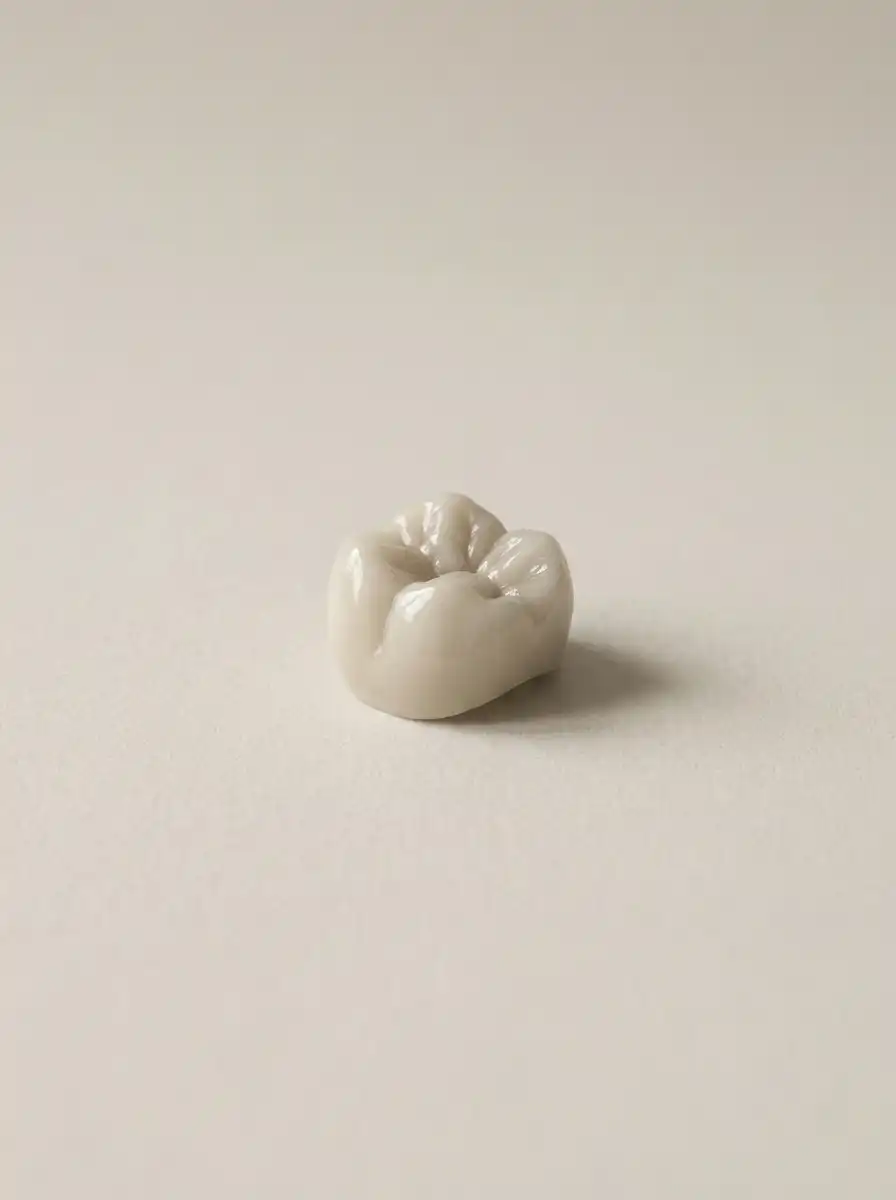
Prosthodontics rebuilds the lost part of a tooth — or the whole tooth. A good crown should be indistinguishable from its neighbours: it breaks the light the same way and meets the same bite.
Crowns that wrap a damaged tooth, bridges that replace missing ones and dentures for toothless jaws are the essential tools of this discipline. The material is chosen for where the tooth sits, the load it carries and the aesthetic expectation: translucency leads at the front, strength at the back.
Prosthetic planning often happens at the same table as smile design and implant treatment.
Who it is for
- Teeth with large fillings, fractures or root canal treatment
- One or a few missing teeth
- Old crowns and bridges ready to be renewed
- Those who have lost all their teeth
Options
- 01
Zirconia crown
Strong, gentle on the tissues and aesthetic; for front and back teeth alike.
- 02
All-ceramic crown
Highly translucent; a natural look, especially on front teeth.
- 03
Bridge
Replaces a missing tooth with support from its neighbours.
- 04
Removable and implant-supported dentures
Full or partial dentures for toothless jaws; can be secured on implants.
The process
Examination
The condition of the teeth, gums and bite is assessed.
Preparation and impression
Where needed, the tooth is prepared under local anaesthesia and an impression is taken.
Temporary
The teeth are protected with temporaries while the final restoration is made.
Try-in
Fit, colour and bite are checked.
Fitting
The final restoration is cemented or fitted; the bite is fine-tuned.
—The Dent BB approach
We never design a crown on its own, but as a sentence in the smile: with the colour, texture and edge of the teeth beside it.
Honest expectations
- A crown requires preparing the tooth; that step cannot be undone.
- A bridge also prepares the neighbouring teeth, which is why an implant is always considered too.
- The lifespan of any restoration depends on care, bite and habits.
Aftercare
- Clean around crowns and bridges; use a threader floss under bridges
- Don't bite hard objects
- Clean removable dentures every day and take them out at night if advised
- Regular check-ups
Frequently asked
Zirconia or porcelain?
It depends on where the tooth is, the chewing load and your aesthetic expectations. Both give excellent results in the right case.
How long do crowns last?
It varies with the material, care and habits, but they can serve for many years.
Can a crowned tooth decay?
The crown itself doesn't, but the natural tooth at its edge can if it is neglected.
A bridge or an implant?
The condition of the neighbouring teeth, the bone and general health are weighed together. An implant has the advantage of leaving the neighbouring teeth untouched.
This page is for information. A diagnosis and a treatment plan require an examination.